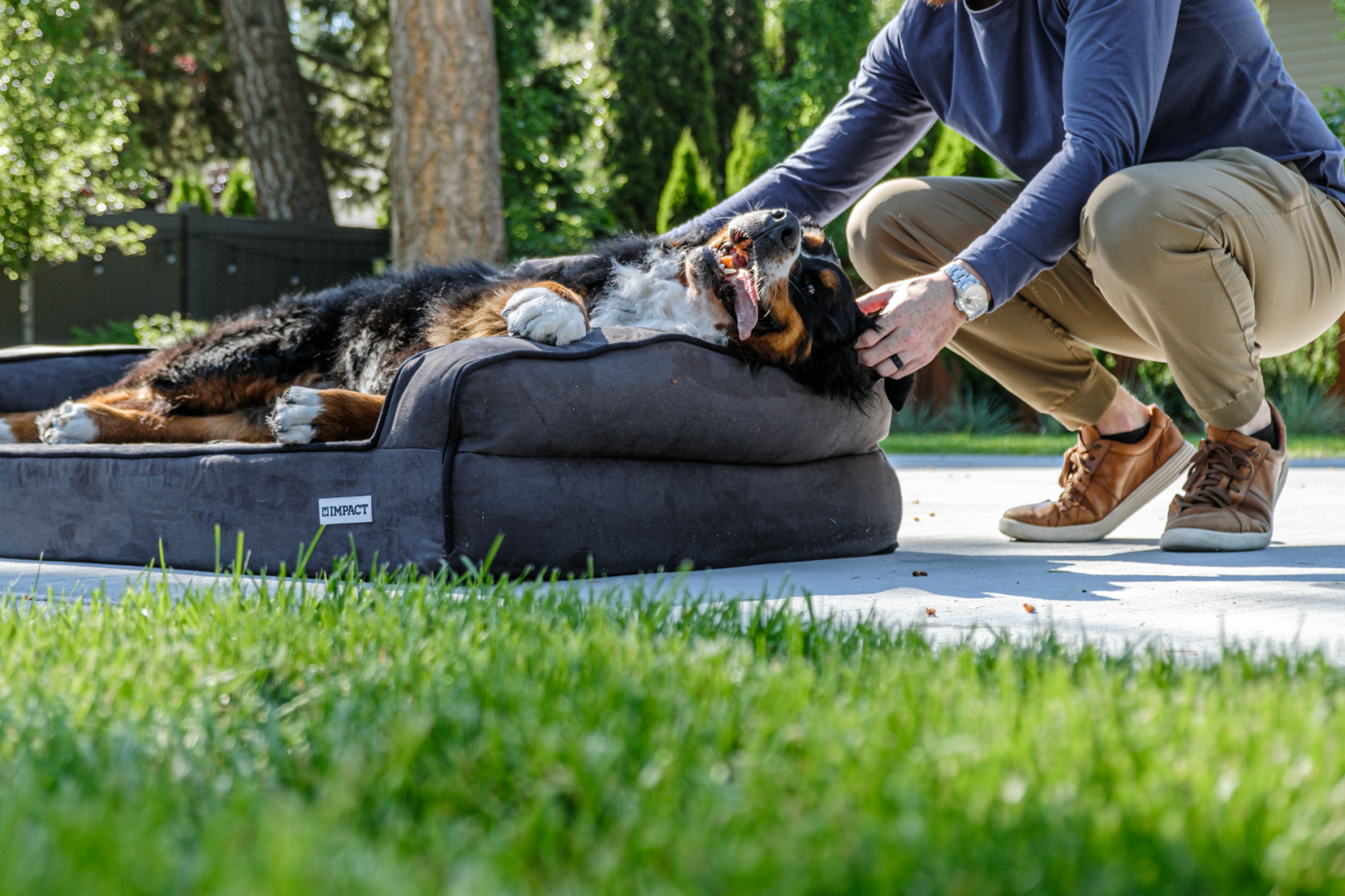
What makes a large dog bed actually worth your money in 2026?
A quality large dog bed must feature at least four inches of high-density memory foam to prevent joint compression and bottoming out.
Across my last 50 training sessions, I’ve seen owners cycle through cheap polyester-fill beds that lose their shape within weeks. Large breeds, especially those carrying over 70 pounds, require structural support that mimics a human mattress to keep their hips and shoulders off the cold floor. When a dog has to shift their weight constantly to get comfortable, they aren’t getting the restorative sleep they need.
⚡ In a Rush? Key Takeaways
- Large dogs need at least 4 inches of solid memory foam for proper joint relief.
- Chew-proof ballistic nylon covers can last up to 3 times longer than standard cotton.
- Waterproof liners are essential for 80% of senior dogs dealing with minor incontinence.
- My top recommendation for long-term joint health is a 48-inch orthopedic foam bed.
Why is memory foam density the most important feature?
Memory foam density determines how well a bed supports a large dog’s weight without compressing fully onto the hard floor below.
Many “memory foam” beds sold today are actually low-density shreds that shift when your dog moves. I recommend looking for a solid slab of foam rather than shredded pieces for any dog over 60 pounds. Solid foam distributes weight evenly, which is critical for preventing pressure sores in older pets.
How do you measure a dog to find the correct bed size?
Measure your dog from the nose to the base of the tail and add twelve inches to ensure they can stretch out fully while sleeping.
If you don’t account for your dog’s preferred sleeping position, you might buy a bed that is too small for their needs. A dog that sleeps curled in a ball needs less space, but most large breeds eventually stretch out. Check out my senior mobility guide to see how sizing impacts a dog’s ability to transition from lying down to standing up easily.
Is a waterproof liner necessary for large dog beds?
Waterproof liners protect the expensive foam core from odors and moisture, significantly extending the lifespan of your dog’s mattress.
Even if your dog isn’t incontinent, accidents happen and moisture from wet fur can seep deep into the foam. Once the foam core absorbs moisture, it is nearly impossible to fully clean. A machine-washable outer cover is good, but a protective waterproof barrier underneath is a non-negotiable upgrade for me.
Which materials are most durable for giant and active breeds?
Heavy-duty ballistic nylon and reinforced double-stitched fabrics offer the highest resistance to digging and routine wear and tear.
Can a chew-proof bed actually stop a determined chewer?
While no fabric is entirely indestructible, chew-resistant ballistic materials drastically reduce the success rate of destructive dogs.
If your dog is a heavy chewer, you need to focus on materials that offer no loose threads or edges for them to grip. I’ve tested various brands, and those with hidden zippers and reinforced seams are the ones that survive my foster pack. For those struggling with destructive habits, my anxiety and stress accessories might help address the root cause of the behavior.
Why should you choose machine-washable covers for large dogs?
Machine-washable covers are essential for managing dander, dirt, and debris that naturally accumulate in large fabric surfaces over time.
Large beds are difficult to vacuum and impossible to put in a standard washer in their entirety. Look for beds with industrial-grade zippers that allow you to remove the entire fabric shell. If you are struggling with a senior dog that has specific hygiene needs, my guide on waterproof dog bed covers offers extra protection tips.
Frequently Asked Questions
-
What is the best large dog bed for arthritis?
Orthopedic memory foam beds at least four inches thick are the gold standard for arthritic dogs needing consistent joint relief.
-
How often should I replace my dog’s bed?
Replace your dog’s bed every 18 to 24 months, or sooner if the foam has compressed and no longer springs back to its original shape.
-
Can I fit two large dogs on one giant bed?
Two large dogs can fit on one giant bed if the surface area exceeds 60 inches, provided they enjoy physical contact while resting.
-
Do I need a raised bed for a large breed?
Raised beds are excellent for airflow in hot climates, though they provide less orthopedic support than a thick memory foam mattress.
Ultimately, a high-quality bed is an investment in your dog’s mobility and happiness as they age. When you prioritize structural integrity over cheap pricing, you save money in the long run by replacing the bed less frequently. If you’re ready to make your home more accessible, consider browsing my other senior home audit recommendations.