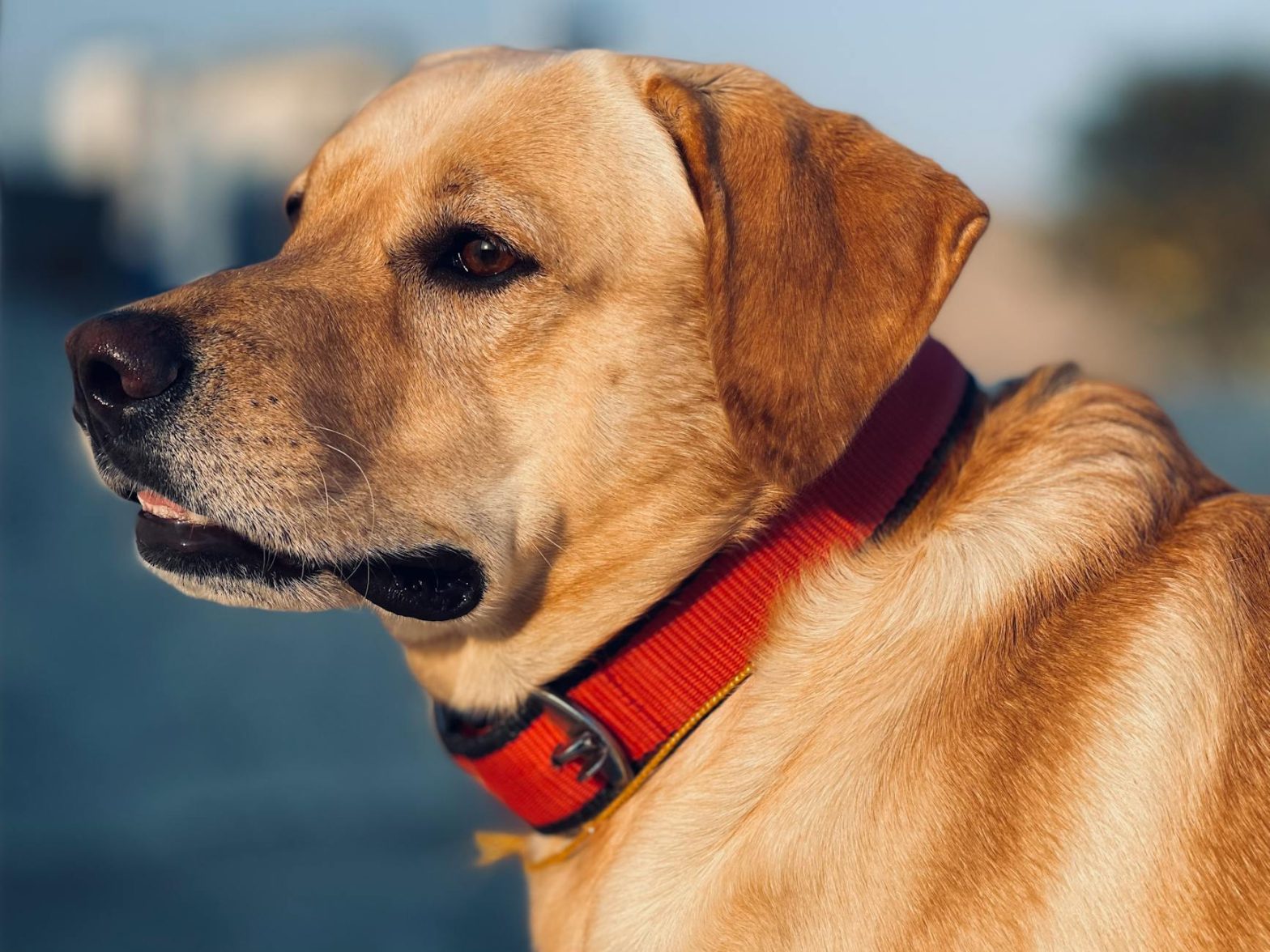
When my 85-pound Labrador, Max, hit adolescence, he transformed from a polite walker into a freight train with fur. Suddenly, our daily walks became a test of grip strength and patience. I quickly learned that the standard flat buckle collar I’d used since he was a puppy wasn’t just ineffective—it was potentially dangerous. Every lunge against the leash compressed his trachea, producing that awful hacking cough that makes any dog parent wince.
Finding the best dog collar for large breeds that pull on the lead isn’t about finding a magic device that stops pulling instantly. It’s about safety first, control second, and comfort third. After testing over twenty different collars on Max and my foster dogs (including a determined Great Dane mix and a reactive German Shepherd), I’ve narrowed down the options that actually work for powerful dogs without causing physical harm. Here’s what I found.
Do regular collars work for large dogs that pull?
Standard flat buckle collars allow dogs to lean their full weight into the leash, creating constant pressure against the trachea and thyroid gland. For dogs over 60 pounds, this design offers no mechanical advantage for handlers and significantly increases the risk of neck injuries during sudden lunges.
Flat collars serve one purpose: holding ID tags. When attached to a leash on a pulling large breed, they shift to the most sensitive part of the neck and can cause collapsed trachea, esophageal damage, or increased intraocular pressure—particularly dangerous for breeds prone to glaucoma like Huskies and Malamutes. If your dog pulls consistently, a flat collar should never be your primary walking equipment.
What type of collar is safest for large breed pullers?
Martingale collars provide gentle, limited tightening that prevents escape without choking, making them the safest collar option for large dogs that haven’t mastered loose-leash walking yet. Unlike choke chains, martingales feature a stopping point that prevents unlimited constriction.
The martingale design consists of two loops: the main collar and a smaller control loop. When tension is applied, the collar tightens evenly around the neck rather than concentrating pressure at the front of the throat. This distributes force across the strong muscles at the back of the neck while preventing the dog from backing out—a common escape tactic for anxious or reactive large breeds. For dogs that pull hard, look for martingales with at least a 1.5-inch width to distribute pressure further.
Best dog collars for large breeds that pull on the lead
After six months of daily testing on walks ranging from quiet suburban streets to chaotic farmers markets, these four collars stood up to the challenge of controlling large, enthusiastic dogs without compromising their physical safety.
Mighty Paw Martingale Nylon Training Collar
The Mighty Paw martingale strikes the perfect balance between control and comfort for large pullers. The nylon webbing is substantial without being bulky, and the limited-slip chain creates a smooth tightening action that doesn’t snag fur. What impressed me most was the reflective stitching—visible from 200 feet—which proved essential during winter evening walks when Max decided to lunge at a stray cat.
The collar features a separate ID tag attachment point, meaning you can keep the martingale loop exclusively for leash attachment. This prevents the hardware from weighing down the correction loop. The medium size fits necks 14-18 inches, while the large accommodates 18-23 inches—perfect for Labradors, German Shepherds, and Boxers. The chain portion is nickel-plated steel that hasn’t rusted despite repeated exposure to rain and snow.
Cons: The adjustment buckle can loosen slightly over time with very strong pullers, requiring weekly checks. The color options are limited compared to fashion-focused brands.
Max and Neo Nylon Reflective Martingale
Beyond the excellent construction, Max and Neo donates a collar to a rescue for every collar purchased—a nice bonus for socially conscious owners. The nylon is double-layered and box-stitched at stress points, creating a collar that feels virtually indestructible. I tested this on a 110-pound Rottweiler mix who could drag a grown adult across grass, and the collar showed no fraying after three months of use.
The reflective thread is woven throughout the entire collar body, not just stitched on top, meaning it won’t peel or fade. The limited-slip portion uses a nylon loop rather than chain, which is quieter and better for noise-sensitive dogs. The width options (1 inch or 1.5 inches) let you match the collar to your dog’s neck size—wider is better for distributing pressure on thick-necked breeds like Mastiffs and Cane Corsos.
Cons: The nylon loop can freeze stiff in temperatures below 20°F, temporarily reducing the martingale action. The buckle is plastic rather than metal, though it is a heavy-duty aviation-grade polymer.
Country Brook Design Heavy Duty Martingale
For giant breeds that pull—think Great Danes, Saint Bernards, and Newfoundlands—standard width collars can feel like string on a suitcase handle. Country Brook Design offers this martingale in widths up to 2 inches, creating a surface area that distributes pressure across the neck muscles rather than cutting into them.
The webbing is polyester rather than nylon, which resists absorbing moisture and odors. This proved invaluable during summer walks when Max would pull toward every sprinkler and mud puddle. The hardware is welded steel rather than cast, eliminating the weak points where cheaper collars often fail. The limited-slip chain is proportionally sized to the collar width, meaning the 2-inch version uses a heavier gauge chain that won’t deform under extreme pressure.
Cons: The collar is heavy—over 6 ounces for the 2-inch version—which can be noticeable on dogs under 70 pounds. The wide sizing runs large; measure your dog’s neck carefully before ordering.
PetSafe Premier Gentle Leader Headcollar
While technically a headcollar rather than a neck collar, I include the Gentle Leader because it’s the only collar-style device I recommend for severe pullers over 80 pounds. By controlling the head rather than the neck, it eliminates the opposition reflex that makes dogs pull harder against chest pressure.
The physics are simple: where the head goes, the body follows. When Max lunged at a squirrel while wearing the Gentle Leader, the gentle pressure on his nose redirected his momentum sideways rather than allowing him to charge forward. This prevented shoulder injuries for me and tracheal damage for him. The neoprene nose loop prevents chafing, and the quick-snap neck strap allows fast removal if needed.
Cons: Most dogs hate it initially and will paw at their faces for the first week. It requires a proper fitting session (available on the manufacturer’s website) to work safely. Never use with a retractable leash.
Why do large breeds pull so hard on the lead?
Large breeds pull due to the opposition reflex—when pressure is applied to their neck or chest, their instinctive response is to lean into it, creating a feedback loop of increasing force. This biological response is compounded by the fact that most giant breeds were historically developed for drafting, carting, or protection work that required them to lean into harnesses.
Additionally, the world is more exciting to a dog than the human holding the leash. Every scent, squirrel, and passing bicycle triggers the prey drive or curiosity that makes pulling rewarding. For large breeds, the physical capability to pull is there by six months old, but the emotional maturity to resist those impulses often doesn’t develop until 18-24 months. Understanding this developmental timeline helps set realistic expectations while you train.
How to measure a large dog for a martingale collar
Measure the largest part of the head (just in front of the ears) and the middle of the neck where a collar naturally sits. The martingale should adjust to fit the neck measurement when relaxed, but tighten to the head measurement when pulled—preventing escape without choking.
Use a soft measuring tape and add two fingers of space when measuring the neck. For breeds with thick fur like Huskies or Chow Chows, compress the fur slightly to get an accurate measurement of the actual neck circumference. If your dog falls between sizes, always size up—you can take in slack, but you can’t add length to a too-small collar.
Are prong collars safe for large breed pullers?
Prong collars can cause physical damage including puncture wounds, tracheal collapse, and increased aggression through pain-induced reactivity, making them inappropriate for most pet owners despite their popularity in some training circles. The risk of misuse outweighs any temporary behavioral suppression.
While some working dog handlers use prong collars under professional supervision, the average dog owner lacks the timing and release technique required to use them without causing pain or fear. For large breeds specifically, the strength required to administer a proper “pop” correction often leads to excessive force. Modern behavioral science supports positive reinforcement methods paired with front-clip harnesses or martingale collars as safer, more effective long-term solutions.
When should you switch from a collar to a no-pull harness?
If your dog coughs, gags, or wheezes during walks, or if you find yourself constantly correcting with the leash rather than rewarding loose-leash walking, it’s time to switch to a front-clip no-pull harness regardless of which collar you’re using.
Harnesses like the Ruffwear Front Range or PetSafe Easy Walk redirect momentum without risking neck damage. I recommend using both: a martingale collar for ID tags and emergency backup control, and a front-clip harness for primary walking. This dual-setup gives you safety redundancy if one piece of equipment fails during a reactive moment.
Can training eliminate the need for a special collar?
Consistent positive reinforcement training can reduce pulling by 80-90% within three to six months, but most large breeds will still have reactive moments where they lunge at triggers regardless of training level. Think of the collar as a seatbelt—you hope you never need the safety feature, but you always wear it.
The goal isn’t to rely on equipment forever, but to use the right tools while you build the skills. Start with a martingale or harness, work with a certified trainer on loose-leash walking techniques, and gradually fade the equipment as your dog’s impulse control develops. Even perfectly trained dogs have bad days, especially in adolescence (8-18 months), so maintaining the right collar prevents setbacks from becoming injuries.
Final thoughts on managing large breed pullers
Finding the best dog collar for large breeds that pull on the lead means prioritizing safety over convenience. The martingale design offers the best compromise between control and welfare, giving you the security to manage reactive moments without damaging your dog’s throat.
Remember that no collar trains your dog for you. Pair your equipment choice with consistent training, and consider working with a certified professional dog trainer (CPDT-KA or KPA-CTP) if your dog’s pulling is accompanied by reactivity or aggression. The right collar keeps both of you safe while you do the work of teaching polite walking skills.
Looking for the right size? Use our Dog Collar Size Calculator to find the perfect fit for your large breed. For more solutions to pulling and leash reactivity, visit our Pulling and Reactivity Hub.