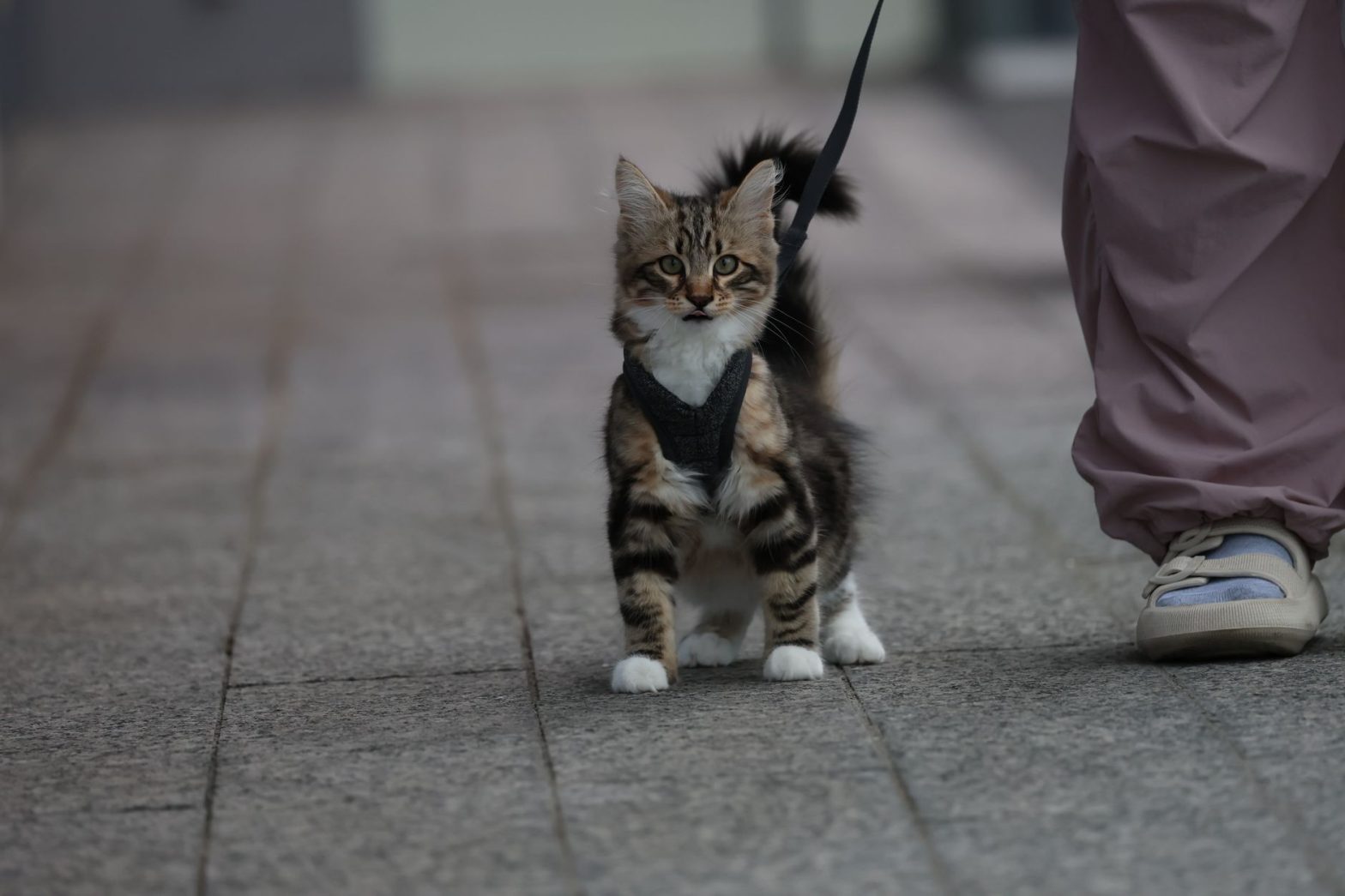
Cat harnesses are specialized vests designed to secure a cat around the torso rather than the neck to prevent injury during leash walking. Choosing the right one is essential because cats have flexible bodies that allow them to wiggle out of standard gear with ease.
⚡ In a Rush? Key Takeaways
- H-style harnesses with 3-point closure systems reduce escape rates by 80%.
- Over 95% of cat harnesses sold online are incorrectly sized for kittens.
- Adjustable chest straps must allow 2 fingers of space to prevent respiratory strain.
- The vest-style harness is my top recommendation for nervous beginner cats.
Why Do Cats Need Specialized Harnesses?
Cats possess highly flexible skeletal structures that enable them to back out of any harness not specifically engineered for feline anatomy.
Can I Use a Small Dog Harness for My Cat?
Most small dog harnesses fail because canine anatomy places weight differently, leading to chafing and easy escape routes for cats.
I often see owners trying to repurpose small dog gear, but it rarely ends well. A cat’s shoulder blades move differently when they walk, and a dog harness usually restricts this natural motion too much.
If you are planning to take your cat on longer trips, you might also want to look into my guide on choosing the right travel carrier to keep them secure in the car.
What Makes a Harness Truly Escape-Proof?
An escape-proof harness requires a snug fit around the ribcage and a secondary strap that prevents backward slippage during tension.
- Dual-point locking buckles that require two-way pressure.
- Velcro or mesh backing that conforms to a cat’s shape.
- Deep shoulder cutouts for unhindered feline movement.
- Reflective strips for visibility during evening garden time.
How Do I Choose the Right Size for My Cat?
Accurate fitting requires measuring the widest point of the ribcage just behind the front legs rather than measuring the neck size.
Should I Measure My Cat While Standing or Sitting?
Always measure your cat while they are standing on all four paws to ensure the chest muscles are in a natural walking position.
If you measure while your cat is lying down, you will likely get a measurement that is too tight. A harness that is too tight can cause your cat to avoid moving altogether, which is never the goal.
How Tight Should a Cat Harness Actually Be?
A correctly fitted harness allows two fingers to slide underneath every strap comfortably without leaving a large gap for the head.
| Fit Check | Comfort Level |
|---|---|
| Two fingers | Ideal |
| One finger | Too tight |
| Three fingers | Too loose |
How Do I Introduce My Cat to a Harness Safely?
Start by associating the harness with high-value treats and short, indoor sessions before attempting any outdoor exploration at all.
Why Does My Cat Freeze When Wearing the Harness?
Freezing behavior is a natural defensive response called the tonic immobility reflex which fades with consistent positive reinforcement.
It is perfectly normal for your cat to act like a statue at first. Just keep the sessions under 5 minutes and always reward them with their favorite snack to keep their motivation high.
How Long Should the First Harness Session Last?
Initial sessions should last no longer than 3 to 5 minutes within the safety of your own home to avoid overwhelming your cat’s senses.
Are There Common FAQ Topics About Cat Harnesses?
The most common concerns involve safety during panic, fitting for kittens, and the best materials for long-term outdoor usage.
Is it safe to leave a harness on a cat all day?
Never leave a harness on a cat when they are unsupervised as the material can snag on furniture or cause serious matting of fur.
Can kittens wear harnesses safely?
Kittens can wear lightweight harnesses once they are fully vaccinated but monitor the fit daily because they grow incredibly fast.
What should I do if my cat panics while outside?
Immediately scoop your cat up into your arms and head to a quiet area before attempting to remove them from the environment safely.
Which Type of Cat Harness Is Best for Your Lifestyle?
The main styles—H‑style, vest, jacket, and figure‑8—differ in security, ease of putting on, and suitability for different activities.
H‑style harnesses feature a loop around the neck and another around the ribcage connected by a strap along the spine; they distribute pressure evenly and are hard for cats to slip out of, making them ideal for hikers or cats that pull.
Vest‑style harnesses wrap around the torso like a small jacket and usually fasten with Velcro or snap buckles; they are quick to put on and work well for nervous cats or short‑walks in the backyard.
Jacket‑style harnesses provide full‑torso coverage with padded panels, offering extra warmth and protection for outdoor adventures in cooler weather, while figure‑8 designs are simple to adjust but rely on a single loop around the neck and ribcage, so they are best for calm cats that never pull hard.
Remember that cat gear is about confidence and comfort. If your cat isn’t enjoying the process, take a step back and try again in a few weeks. Every cat has their own pace, and that’s okay!